

The Words Children Remember
How Everyday Conversations Shape Learning and Confidence
As educators and parents, we often focus on the lessons we teach, the books children read, or the skills they develop in school. While these are all important, there is another powerful influence on children’s learning that often goes unnoticed: the words they hear every day.
Ordinary conversations—during breakfast, on the drive to school, while helping with homework, or before bedtime—can leave lasting impressions. Long after children forget the details of a math lesson or a spelling test, they often remember how the important adults in their lives made them feel.
The language we choose has the power to shape not only a child’s academic growth but also their confidence, motivation, and willingness to embrace new challenges.
Words Become Beliefs
Children are constantly making sense of the world around them. Just as importantly, they are forming beliefs about themselves.
Educational psychologist Albert Bandura, known for his work on self-efficacy, demonstrated that people’s belief in their own abilities strongly influences their motivation, perseverance, and success. Children who believe they are capable are more likely to attempt difficult tasks, recover from setbacks, and continue learning even when something feels challenging.
The words adults use help shape those beliefs.
A child who regularly hears:
“I believe you can figure this out.”
begins to develop confidence.
A child who repeatedly hears:
“You’re just not good at this.”
may begin to accept that statement as part of their identity.
Over time, these messages become the inner voice children carry with them.
Encouragement Is Different from Praise
Although praise and encouragement are often used interchangeably, they are not the same.
Praise usually focuses on the outcome.
“You’re so smart.”
“You got an A!”
“You’re the best reader.”
Encouragement focuses on the process.
“I noticed how patiently you worked through that problem.”
“You kept trying even when it was difficult.”
“I’m proud of the effort you put into your writing.”
Encouragement teaches children that growth comes through persistence, curiosity, and practice rather than natural talent alone. It also gives them something they can control—their effort, strategies, and determination.
Everyday Conversations Matter More Than We Realize
Many of the most meaningful learning moments happen outside the classroom.
A simple question at dinner such as,
“What was something interesting you discovered today?”
invites reflection.
Saying,
“Tell me how you solved that problem,”
encourages children to explain their thinking.
Asking,
“What do you think you could try differently next time?”
helps develop problem-solving skills and resilience.
These conversations communicate something important:
“Your ideas matter.”
When children feel heard, they become more willing to share, ask questions, and think independently.
Educational psychologist Jerome Bruner believed that learning is fundamentally a social process. He helped develop and popularize the concept of scaffolding, explaining that children learn most effectively when caring adults provide guidance, encouragement, and meaningful dialogue before gradually allowing them to become more independent. Every thoughtful conversation, open-ended question, and encouraging response helps children build not only knowledge but also the confidence to think for themselves.
The Lasting Power of Positive Language
Children do not need constant compliments. They need adults who notice their efforts, listen carefully, and communicate genuine confidence in their ability to learn.
Simple phrases can have a remarkable impact:
“I’m proud of how hard you worked.”
“Mistakes help us learn.”
“Let’s figure it out together.”
“I can see you’re improving.”
“Tell me what you’re thinking.”
These statements reduce anxiety while encouraging curiosity and perseverance.
They also strengthen the trusting relationships that support meaningful learning.
Practical Ways Parents Can Start Today
Small changes in everyday conversations can make a significant difference.
Try replacing:
“That’s wrong.”
with
“Let’s look at another way to solve it.”
Instead of asking only,
“Did you finish your homework?”
consider asking,
“What was the most interesting thing you learned today?”
When your child becomes frustrated, rather than immediately providing the answer, try saying,
“Let’s work through it together.”
These simple shifts encourage independence while reminding children that learning is a process—not a race.
Every Conversation Is an Opportunity
As educators, we recognize that learning does not happen only through textbooks and lesson plans. It also grows through relationships, encouragement, and meaningful conversations.
Bandura’s research reminds us that children develop confidence when they believe in their own abilities, while Bruner’s work shows us that those beliefs are often nurtured through supportive conversations with caring adults. Together, their research reinforces an important truth: the words we choose today can shape the learners children become tomorrow.
Children may not remember every lesson we teach, but they often remember how we spoke to them, how we encouraged them, and how we helped them believe they were capable.
Sometimes, the words they remember become the voice that guides them for the rest of their lives.
Thank you for reading.
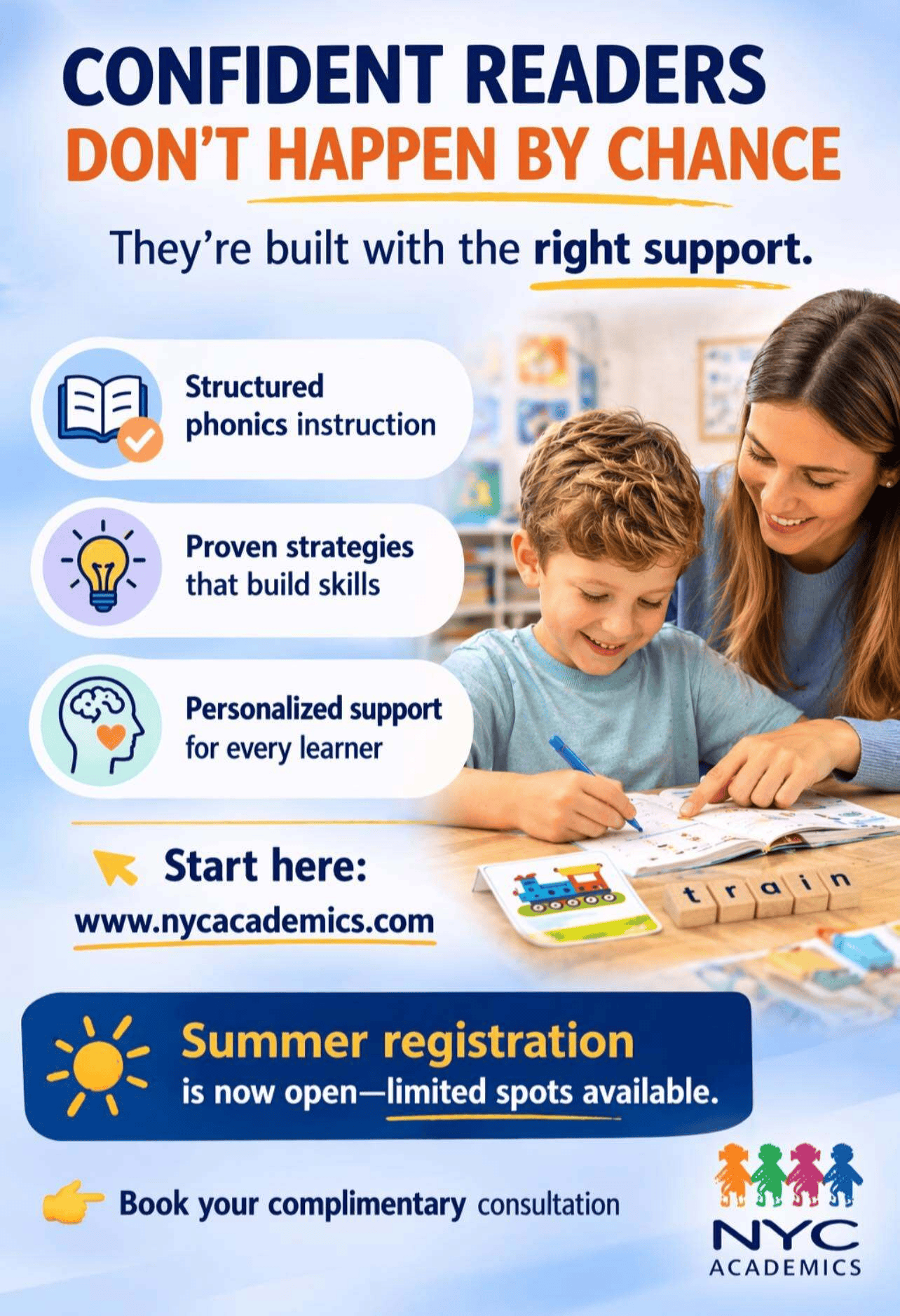
At NYC Academics, we believe every child can succeed with the right guidance, encouragement, and support. If you’d like to learn more about our personalized tutoring services, we invite you to schedule a complimentary consultation.
We look forward to supporting your child’s learning journey.